Quick answer
Yes, you can fly with type 1 diabetes and a toddler, and it gets easier with a system. Pack backups for your backups: insulin vials and pens, a meter and test strips, plus extra pods and CGM sensors, all in your carry-on. Keep insulin cold in an insulated bag with an ice pack, tell TSA about your devices before screening, and bring a brand-new toy for the flight.
Our 4-hour Thanksgiving flight on Southwest
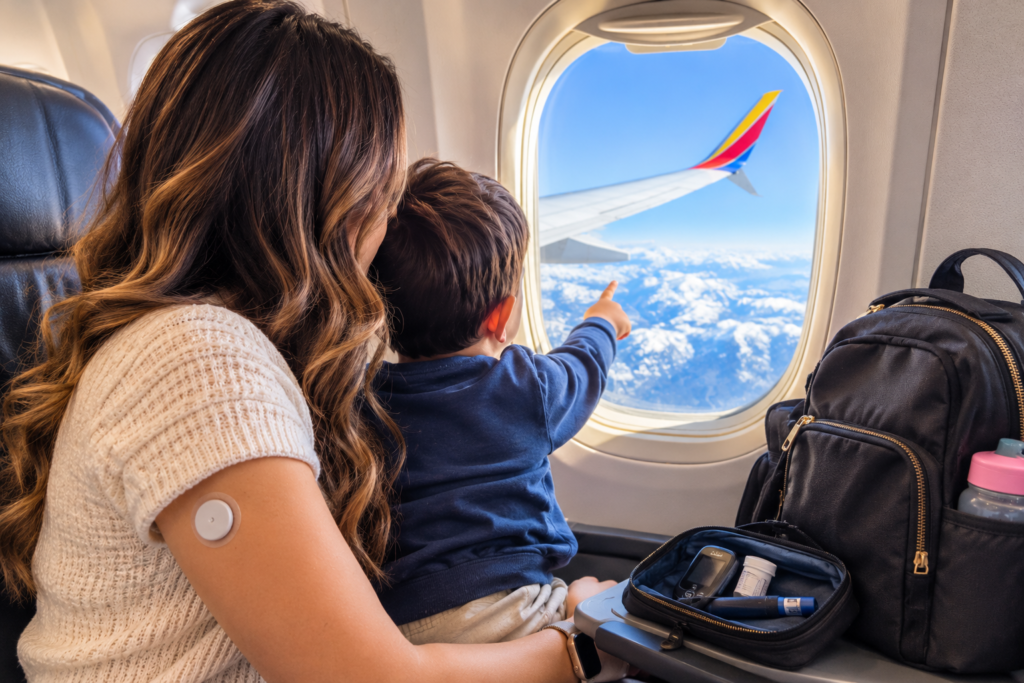
This Thanksgiving, my toddler and I flew to visit family. It was a 4-hour Southwest flight, and I was going to be away from home for the holiday. That meant one thing for a mom with type 1 diabetes: I had to bring everything.
I wear an insulin pump and a CGM. Both are wonderful until they aren’t. A pod can fail. A sensor can fall off when a toddler climbs on you. So I packed as if something would go wrong, and I planned for the “what if” moments.
The biggest “what if” came true. I booked the flight during my son’s nap time, hoping he’d sleep. He didn’t nap at all. Because I was ready, it was still a good flight.
Here is exactly how I packed, how I got through security, and how I kept us both happy for 4 hours in the air. If you’re a T1D mom planning holiday travel with an active toddler, I hope it saves you a sleepless night of packing.
Table of Contents
Before you book: what I’d do again
- Fly nonstop. Four hours is plenty. A connection means another security line and another gate sprint with a toddler and four bags.
- Book during nap time, but don’t count on it. Sometimes they sleep, sometimes they don’t. Plan for both.
- Pick your seats early. Southwest now has assigned seats, so you can choose a window for your toddler and the seat next to it for you. No more hoping to sit together. “The FAA says a child in their own seat with an approved car seat or harness is safest.”
- Join Rapid Rewards before you fly Southwest. It’s free, and members get free WiFi on the plane. That’s how my son watched his iPad shows.
- Give yourself extra time. Diabetes screening and a toddler both add minutes at security. I aim for 2 hours before a domestic flight.
How I pack: my 4-bag system for T1D travel with a toddler
I carry four bags. It sounds like a lot, but each one has one job, so I always know where to reach.
| Bag | What goes in it | Why it works |
|---|---|---|
| Insulated lunch bag | Ice pack, insulin vials and pens, plus my son’s yogurt and cheese | Keeps insulin and toddler food cold in one place |
| Small purse | Phone (my CGM reader), ID, boarding pass, glucose tabs | Everything I need in seconds, even mid-low |
| Personal item/backpack | One spare pod, one spare CGM sensor, snacks, toddler’s extra clothes, new toy, iPad | Stays under the seat, so a failed device is fixed in minutes |
| Carry-on (hand carry) | All the other backup pods, sensors, pens, vials, test strips, swabs | The full backup stash, in the overhead bin |
Why a spare pod and sensor go in my personal item: during the flight, the overhead bin can be out of reach for a long time. If my pod fails at 30,000 feet, I don’t want to wait for the seatbelt sign to go off.
Never check your diabetes supplies. Checked bags get lost, and cargo holds can get too cold. Medical supply bags often don’t count toward your carry-on limit, but confirm with your airline before you fly.
My T1D packing list: backups for my backups
- Insulin vials and insulin pens, in case my pump stops working
- Syringes or pen needles for the backup insulin
- Extra pods (at least double what I’ll use)
- Extra CGM sensors (at least double)
- Blood glucose meter and finger-stick test strips, in case my CGM stops working
- Lancets and alcohol swabs
- Glucagon
- Low snacks and glucose tabs
- Ice pack and insulated bag
- Phone charger and an airline-approved power bank
- Doctor’s letter and prescription copies
- Sharps container for used needles
My toddler packing list
- A brand-new toy he has never seen (my secret weapon)
- iPad with shows downloaded, plus kid headphones
- Yogurt, cheese, and lots of snacks
- Extra clothes: he’s potty trained, but accidents still happen
- A spare shirt for me too
- Wipes and a plastic bag for wet clothes
- His comfort item for nap time
About the new toy: I buy one small toy and keep it hidden until we’re on the plane. Something new holds a toddler’s attention far longer than a favorite he’s seen 100 times.
[Turn both lists into a free printable PDF and offer it as an email signup.]
The insulated lunch bag trick: insulin and toddler food together
This is my favorite hack. I use one insulated lunch bag with an ice pack for my insulin and my son’s yogurt and cheese.
- Insulin stays cool for the travel day, and his snacks stay fresh.
- One bag to show TSA. Insulin and toddler food are both exempt from the 3.4 oz liquid rule, so I just tell the officer what’s inside.
- Freeze the ice pack solid. Ice packs for insulin and toddler food are allowed through security.
- Wrap the insulin in a small cloth or pouch so it never touches the ice pack directly. Insulin shouldn’t freeze.
- Refresh the ice at your destination, or move insulin into the fridge as soon as you arrive.
Getting through TSA with an insulin pump, a CGM and a toddler
- Take out the insulated bag and diabetes supplies and put them in their own bin, apart from everything else.
- Tell the officer first. I say: “I have type 1 diabetes. I’m wearing an insulin pump and a CGM. This bag has insulin, medical supplies, and my toddler’s yogurt.”
- Stay connected. You can be screened without taking off your pump or CGM. The officer may swab your hands or the device.
- Ask for a pat-down if your device maker says not to go through the body scanner. Ask for a hand check of spares if they shouldn’t go through the X-ray.
- Keep your toddler’s shoes on. Kids 12 and under can leave shoes and light jackets on.
- Call TSA Cares at 855-787-2227 at least 72 hours before you fly if you want an officer to help you through. It’s free.
Pump and CGM airport screening at a glance
| Device | Wear through metal detector | Wear through body scanner | Spares through bag X-ray |
|---|---|---|---|
| Dexcom G7 | Yes | Yes | Yes |
| Dexcom G6 | Yes | No, ask for pat-down | No, ask for hand check |
| FreeStyle Libre 2 / 3 | Yes | No, ask for pat-down | Check Abbott’s guidance |
| Omnipod 5 | Yes | Check Insulet’s guidance | Yes |
| Medtronic MiniMed pumps | Yes | No, ask for pat-down | No, ask for hand check |
| Tandem pumps | Yes | Check Tandem’s guidance | No, ask for hand check |
Device makers update their guidance. Check your own device manual before you fly. If your pump can’t go through the body scanner, ask for a pat-down even if your CGM can.
On the plane: when your toddler skips his nap
I was hoping for a nap. I got 4 hours of a wide-awake toddler. Here is what got us through.
- The new toy came out first, right after takeoff. It bought me a long stretch of quiet play.
- Then the iPad, on free WiFi. Southwest’s free WiFi for Rapid Rewards members meant he could watch his shows. I let him have screen time without guilt. Travel days have different rules.
- Snacks in rotation. Yogurt, cheese, crackers, one at a time. A new snack every 30 minutes breaks up a long flight.
- A walk to the restroom counts as an activity. It also helps a potty-trained toddler avoid accidents.
- I kept my own lows covered. I kept glucose tabs in my pocket, not the overhead bin. Chasing a toddler through the airport often drops my blood sugar.
- I checked my CGM at every milestone: security, gate, takeoff, halfway, and landing.
- CGM alerts on vibrate and loud. Cabin noise can drown out a soft beep.
Holiday travel with T1D: staying with family
Thanksgiving with family is one of the best parts of the year, and one of the hardest for blood sugar.
- Ask for fridge space for your insulin as soon as you arrive.
- Show one adult where your glucagon is and how to use it. It takes two minutes and gives you peace of mind.
- Expect different numbers. Holiday food, a new schedule, and less sleep all change things. I watch my CGM more closely and bolus for the big meal like I would at home.
- Keep a low kit in your pocket during busy family gatherings. Your bag will end up in another room.
- Count your supplies on day one. If anything is short, find the nearest pharmacy before the holiday closes.
The mental load nobody talks about
Traveling as a mom with type 1 diabetes means doing two jobs at once: taking care of a toddler and taking care of yourself. Nobody sees the math happening in your head while you board a plane.
So here’s your permission slip. Overpack your supplies. Let the iPad do its job. Ask for help at security. None of it means you’re doing it wrong. It means you planned well.
The first trip is the hardest. By the third, you’ll have your own system, and you’ll be the one giving tips to the next nervous T1D mom at the gate.
Frequently Asked Questions
Can I bring insulin on a plane in the US?
Yes. TSA allows insulin in any amount in your carry-on after screening, and it does not have to follow the 3.4 oz liquid rule. Tell the officer you have it and keep it separate from other liquids.
Do I have to take off my insulin pump or CGM at airport security?
No. You can be screened while still connected to your insulin pump or CGM. Tell the officer before screening starts, and ask for a pat-down if your device maker says not to go through the body scanner.
Can a CGM go through the airport body scanner?
It depends on the brand. Dexcom G7 can be worn through metal detectors and body scanners, but FreeStyle Libre sensors and Dexcom G6 should avoid body scanners. Check your device manual and ask for a pat-down if you’re unsure.
Can I bring juice for low blood sugar through TSA?
Yes. Food and drinks needed to treat low blood sugar are allowed as diabetes supplies. Tell the officer at the start of screening that they’re for treating hypoglycemia.
Can I bring toddler milk and snacks through airport security?
Yes. Formula, breast milk, toddler drinks, and baby or toddler food, including puree pouches, are allowed over 3.4 oz in your carry-on. They don’t need to fit in your quart-size bag, but tell the officer you have them.
What is TSA Cares and should I use it?
TSA Cares is a free helpline for travelers with medical conditions or disabilities. Call 855-787-2227 at least 72 hours before your flight, and TSA can arrange a Passenger Support Specialist to help you through screening.
Should I pack diabetes supplies in my checked bag?
No. Keep all insulin and diabetes supplies in your carry-on. Airlines must let you keep diabetes supplies with you on the plane, and checked bags can get lost or too cold.
Does my toddler need their own seat on a plane?
Yes, if they’re 2 or older. Under 2, they can fly on your lap, but the FAA says an approved car seat or CARES harness in their own seat is safest.
How much extra diabetes supplies should I pack for a trip?
Pack at least double what you expect to use. Flights get delayed, sensors fail and pump sites get knocked off, especially with an active toddler around.
How do I keep insulin cool while traveling?
Use an insulin cooling case or a small cooler with frozen gel packs. Gel packs must be frozen solid at the TSA checkpoint, and insulin should never be left in a hot car.
Can I put insulin and toddler food in the same insulated bag?
Yes. Insulin and toddler foods like yogurt are both allowed over 3.4 oz, and ice packs that keep them cold are allowed too. Wrap the insulin so it doesn’t touch the ice pack and freeze.
Does Southwest have free WiFi for kids’ shows?
Yes, for Rapid Rewards members. Joining is free, and members get free WiFi on Southwest flights where it’s available, so you can stream shows on a tablet.
What should I keep at my seat if I wear an insulin pump?
Keep one spare pod or pump site, one spare CGM sensor, backup insulin, and fast-acting sugar in your personal item under the seat. The overhead bin can be out of reach for long stretches of the flight.
Final thoughts
Flying with type 1 diabetes and a toddler takes more planning, but it’s completely doable. Pack backups for your backups, keep a spare pod and sensor at your seat, use an insulated bag for insulin and snacks, and save a brand-new toy for the plane.
Are you a T1D mom who travels? Share your best tip in the comments, and follow along on Instagram at @ladyclaylife for more real-life type 1 diabetes and mom life.
I am sharing this during Diabetes Awareness Month.
This post shares my personal experience and is not medical advice. Talk to your doctor or diabetes care team before changing how you manage your diabetes while traveling.