
What are the early symptoms of Type 1 diabetes? Type 1 diabetes symptoms can include excessive thirst, frequent urination, increased hunger, unexplained weight loss, fatigue, and other changes in the body.
In my case, several of these symptoms appeared when I was 17, but I didn’t know they were signs of Type 1 diabetes.
I was eating a lot. I was constantly thirsty. I was going to the bathroom all the time. I was losing weight even though I was eating more than usual. I also had itching in my private area and eventually developed infections.
At the time, none of us knew that these symptoms were pointing toward Type 1 diabetes.
But my mom paid attention.
And that may have made all the difference.
The Symptoms I Had Before My Type 1 Diabetes Diagnosis
Before I was diagnosed, I experienced several symptoms that, looking back, were important warning signs:
- Extreme hunger and eating much more than usual
- Unexplained weight loss despite eating a lot
- Excessive thirst
- Frequent urination
- Itching in my genital area
- Infections around the same time
- Sugar appearing in my urine
- High blood sugar that was discovered through testing
I didn’t recognize these symptoms as diabetes at the time.
I was 17 years old. I didn’t know what Type 1 diabetes was supposed to feel like.
I Was Eating More Than Usual – A Lot More
One thing my mom noticed was how much I was eating.
I remember one particular day because it was so unusual that it stuck with her.
My mom had put slices of bread on the table for the family. There were about 10 slices—roughly two for each person.
But somehow, I ended up eating almost eight of them.
My mom was surprised.
She had put the bread there for everyone, and I had eaten most of it.
Looking back, it was one of those moments that seems much more significant in hindsight.
I was extremely hungry.
And it wasn’t just that I was eating a little more than usual. I could eat a lot and still feel like I needed more.
I Was Losing Weight Even Though I Was Eating
The strange part was that I wasn’t gaining weight.
I was losing it.
My mom was concerned because I could eat plenty of food, including carbohydrates, but my weight kept going down.
At the time, we didn’t understand why.
Today, I know that unexplained weight loss can be an important symptom of Type 1 diabetes.
When the body doesn’t have enough insulin, glucose can’t be used properly by cells for energy. The body may then start breaking down fat and muscle for energy, which can contribute to weight loss.
So even though I was eating a lot, my body wasn’t using that food normally.
I Was Always Thirsty
Another major symptom was thirst.
I was drinking a lot of water, but I still felt thirsty.
I could drink water and still want more.
At the same time, I was going to the bathroom frequently.
Why does Type 1 diabetes cause excessive thirst and frequent urination?
When blood glucose becomes too high, the kidneys try to remove some of the excess glucose through urine. This can increase urination and fluid loss, which can make a person feel extremely thirsty.
That’s exactly how it felt for me.
I was drinking more.
And then I was going to the bathroom more.
The two symptoms seemed unrelated at the time.
They weren’t.
I Also Had Itching and Infections
Around the same period, I also developed itching in my private area.
I didn’t understand what was causing it.
Eventually, I had both a throat infection and a urinary infection, and I was taking antibiotics.
That’s when something unexpected showed up.
During a urine test, my mom noticed that the report showed a small amount of sugar in my urine.
She paid attention to it.
And that little detail became an important turning point.
Sugar in My Urine Was the Clue My Mom Didn’t Ignore
At the time, the doctor told us mild sugar in the urine could happen during an infection and wasn’t necessarily something to worry about.
But my mom wasn’t convinced.
She has Type 2 diabetes herself, so she had always been alert about diabetes and my health.
She had already noticed that:
- I was eating much more than usual.
- I was losing weight.
- I was drinking a lot of water.
- I was going to the bathroom frequently.
- I had itching.
- I had developed infections.
Now there was glucose showing up in my urine.
Something didn’t feel right to her.
So instead of stopping there, she took my report to her endocrinologist.
I’m incredibly grateful she did.
The Test That Changed Everything
The endocrinologist ordered an A1C test and other blood tests.
The results showed that my blood sugar was unexpectedly high.
I was quickly diagnosed with Type 1 diabetes and started on insulin.
Suddenly, all those seemingly unrelated symptoms made sense.
The hunger.
The weight loss.
The thirst.
The frequent urination.
The itching.
The infections.
The glucose in my urine.
They weren’t separate problems.
They were clues.
What Is A1C and Why Was It Important?
A1C is a blood test that estimates a person’s average blood glucose level over approximately the previous two to three months.
For me, the A1C helped reveal that my blood sugar had been much higher than it should have been.
A diagnosis of Type 1 diabetes isn’t based on A1C alone. Healthcare professionals may use blood glucose testing and other tests to determine whether someone has diabetes and, when appropriate, what type of diabetes they have.
In my case, the endocrinologist recognized that I needed insulin and diagnosed me with Type 1 diabetes.
Starting Insulin Changed How I Felt
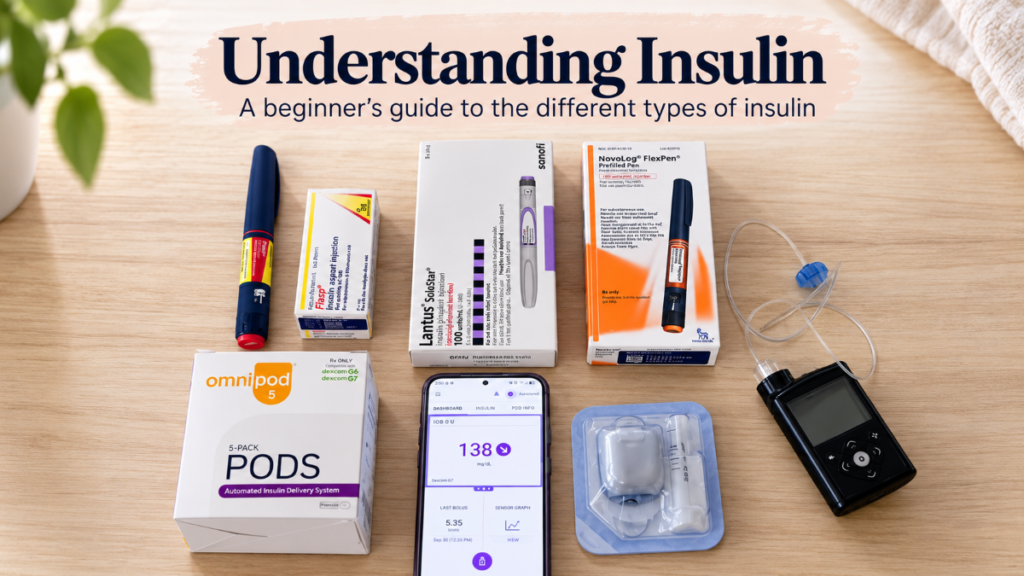
After my diagnosis, I was enrolled in a diabetes education program and started insulin. (If you are new to insulin, I also wrote about the different types of insulin and how they work).
I remember using an insulin pen. There was a lot to learn.
I had to learn about insulin, blood sugar, food, carbohydrates, and how to manage a condition that would be part of my life.
But something amazing happened.
I started feeling better.
Within a couple of months, my weight started coming back.
My body started settling down.
I wasn’t constantly starving anymore.
Even my acne improved and became much more manageable.
I could see the difference in myself.
It felt like my body was finally getting what it had been missing.
Looking Back, the Signs Were There
When I think about that time now, I realize how easy it was to overlook the symptoms.
I was 17.
I was a teenager.
Eating a lot could have been blamed on being young.
Losing weight could have been dismissed.
Being thirsty could have seemed harmless.
Frequent bathroom trips could have been overlooked.
And the glucose found in my urine was initially attributed to the infection.
But all of those things were happening around the same time.
Together, they told a much bigger story.
And my mom noticed.
She didn’t just look at one symptom.
She looked at the whole picture.
I will always be grateful for that.
What Are the Early Type 1 Diabetes Symptoms?
The most common symptoms of Type 1 diabetes can include:
- Increased thirst
- Frequent urination
- Increased hunger
- Unexplained weight loss
- Fatigue
- Blurred vision
- Irritability or mood changes
Symptoms can develop relatively quickly, particularly in children and young people.
In my case, increased hunger, unexplained weight loss, excessive thirst, and frequent urination were some of the biggest clues.
The important thing is not to assume that every symptom means diabetes. But when several of these symptoms occur together, especially unexplained weight loss combined with excessive thirst and frequent urination, it’s important to talk with a healthcare professional and have blood glucose checked.
Can You Have Type 1 Diabetes Without Knowing It?
Yes. A person can have Type 1 diabetes without immediately recognizing what is happening, especially when the symptoms are initially mild or are mistaken for something else.
That was essentially my experience.
I didn’t wake up one morning knowing I had diabetes.
Instead, several changes happened over time.
I was eating more.
I was losing weight.
I was thirsty.
I was urinating frequently.
I developed other problems.
Eventually, a urine test gave my mom another reason to question what was happening.
It was the combination of these clues that ultimately led to my diagnosis.
My Biggest Takeaway
I don’t remember my diagnosis as one single moment.
I remember the series of little things that happened before it.
Eating eight slices of bread when my mom had put about ten on the table for the entire family.
Being hungry again.
Losing weight instead of gaining it.
Drinking water constantly.
Running to the bathroom.
The itching.
The infections.
The urine test.
And then my mom looking at that report and thinking:
Something isn’t right.
She trusted that feeling enough to get another opinion.
That second opinion changed my life.
Today, when I look back at my 17-year-old self, I wish I had known what those symptoms meant.
But I also know how easy it is for families to miss the signs, especially when they don’t know what they’re looking for.
Sometimes, the body gives us clues before we know how to interpret them.
My mom noticed mine.
And I’m incredibly grateful she did.
Could These Symptoms Be Happening to You?
If you or someone you know is experiencing excessive thirst, frequent urination, increased hunger, unexplained weight loss, or other unusual symptoms, don’t try to diagnose yourself from a blog post.
Talk with a healthcare professional and ask whether blood glucose testing is appropriate.
If symptoms are severe or developing rapidly, especially vomiting, abdominal pain, difficulty breathing, confusion, extreme weakness, or severe dehydration, seek urgent medical attention. These can be signs of diabetic ketoacidosis (DKA), a serious complication of untreated Type 1 diabetes.
Frequently Asked Questions
What are the early symptoms of Type 1 diabetes?
Common early symptoms include excessive thirst, frequent urination, increased hunger, unexplained weight loss, fatigue, and sometimes blurred vision. Symptoms can develop relatively quickly, especially in children and young adults.
Can Type 1 diabetes cause weight loss even if you are eating a lot?
Yes. When there isn’t enough insulin, glucose cannot be used properly by the body’s cells for energy. The body may begin breaking down fat and muscle for energy, which can lead to unexplained weight loss even when someone is eating a lot.
Why does Type 1 diabetes cause excessive thirst and frequent urination?
When blood glucose becomes very high, the kidneys try to remove excess glucose through urine. This can increase urination and fluid loss, which can lead to excessive thirst.
Can teenagers develop Type 1 diabetes?
Yes. Type 1 diabetes can develop at any age, including during childhood and the teenage years. I was 17 when I was diagnosed.
What should I do if I think I have symptoms of Type 1 diabetes?
If you have symptoms such as excessive thirst, frequent urination, unexplained weight loss, or unusual hunger, talk with a healthcare professional and ask whether blood glucose testing is appropriate. If symptoms are severe or rapidly worsening, seek urgent medical attention.
Have You Experienced Something Similar?
If you were diagnosed with Type 1 diabetes after experiencing symptoms that were difficult to recognize, I’d love to hear your story.
You can share your experience through the Contact page.
Your experience could help someone else recognize the signs sooner.